Maximising the
Success of Business Services
If you are planning to climb a mountain, you don't plan to fail; you plan to succeed. Furthermore, the more complex and difficult the climb, the better the support system you need to get to the top.
Similarly with Business Services.
All organisations should plan for successful Business Services and the more complex the Services, the better the Service Management System that will be required to manage and support these Services.
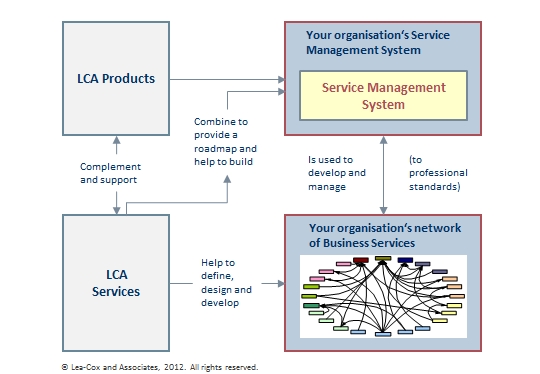
Our mission is to deliver a powerful set of products and services to help our Customers maximise the success of their Business Services – and hence, their business. To help achieve this, a key goal for us is to become an excellent Service Definition and Service Design Company.
The products we offer are relevant to all types and sizes of organisations and are very cost-effective. The services we offer are carefully designed to focus on maximising the success of your Business Services, whether to enhance an existing Service or to introduce a new Service. They extend also to helping to build a Service Management System that is compliant with international standards and best practice.
All our products and services are designed to scale up from a small, single-service business to large, multi-product and multi-service organisations.
Key Products in briefHigh quality Process Templates for managing ServicesSave large amounts of time, effort and cost in developing and implementing professional service management capabilities based on the internationally recognised ITIL best practice guidelines – and introduce an important collaboration and "on-the-job" learning aid at the same time! ISO 20000 BridgeTrack your compliance with the Service Management standard ISO20000, effectively and easily. Advanced Configuration Management TemplatesEnsure you manage configurations and address the most fundamental governance issues of all. Essential Direction for Business Services TemplatesSenior management direction and support has a major impact on the success of Business Services – with one more important benefit. |
Key Services in briefDefine and Design Business Services for SuccessThe profitability of many organisations is highly dependent on the success of their Business Services. Hence it makes sense to focus on those factors that determine success when defining and designing these Services – in fact, hugely so! Identify and establish a Service Management StrategyEffective and efficient Business Services are essential components of all organisations - it requires a focused and proactive Service Management Strategy. This is usually a short assignment with big results. Start up and develop your organisation’s Service Management SystemA Service Management System is the best mechanism to ensure all your Business Services are managed consistently well. Introduce a consistent approach to implementing your ITIL projects and save even more time and money. Project Management ResourcesLooking for skilled Project Managers or other skilled Service Management project staff? We offer a limited but FREE service. |
Key Concepts in briefService Management SystemStarting from very small, this "system" will transform the way you manage your services. Service ArchitectureA common approach to designing and developing Services facilitates easy Service integration and provides the basis for reducing the cost of managing and maintaining them – sometimes spectacularly! Business Services vs IT Services vs Digital ServicesWhat is the difference? Why is it important? |